The short answer
What is the Nha Trang puppet show, and is it like traditional water puppetry?
What the Life Puppets show at Đó Theatre is, how it differs from classic Vietnamese water puppetry, who it suits, and what to know before you book on Klook.
See tickets on Klook ↗Quick answer
The Nha Trang puppet show is Life Puppets, an hour-long production at Đó Theatre on Bãi Tiên beach. It grows out of Vietnamese water puppetry but is not a classic water-puppet programme. Water puppets share the stage with string, shadow and animated puppets, and a live orchestra of indigenous instruments plays throughout. If you want village skits in a waist-deep pool, that is a different evening. If you want a modern reinvention, this is it.
What the show is
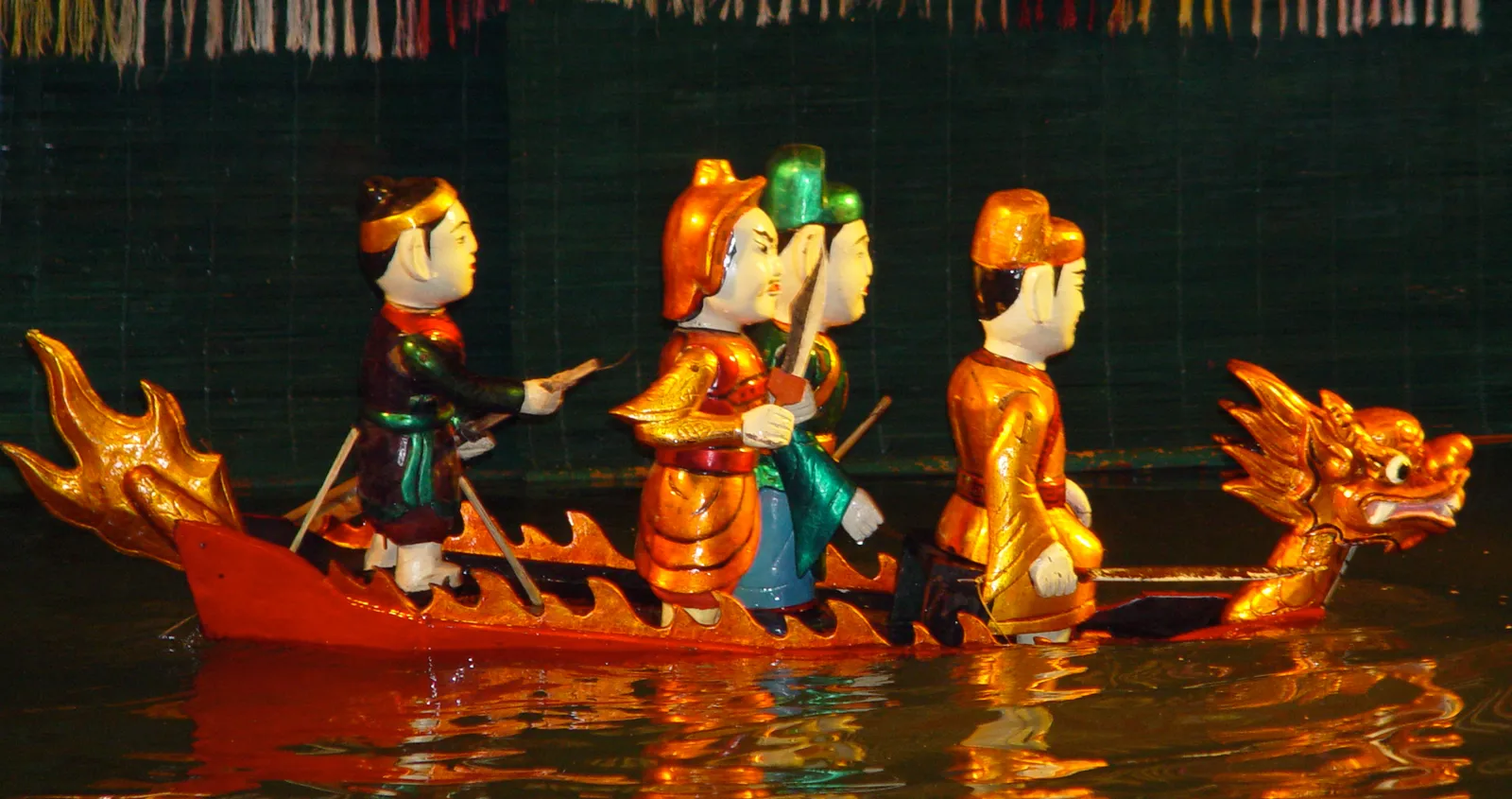
Life Puppets is the main production at Đó Theatre, a purpose-built hall on Bãi Tiên beach in Nha Trang. Klook lists it at about 60 minutes, and the theatre's own FAQ gives the same length. The theatre describes it as a reinvention of Vietnamese water puppetry: its stage is split into four interwoven performance spaces, and water, string, shadow and animated puppets share it with contemporary dance. A live orchestra plays throughout, and the show is staged in a seated theatre, not at a village pond.
Where water puppetry comes from
Water puppetry, múa rối nước in Vietnamese, is a tradition that Wikipedia says goes back as far as the 11th century, with its roots in the village communities of the Red River Delta, in the north. Lacquered wooden puppets are worked from behind a screen by puppeteers standing in a waist-deep pool, using bamboo rods and strings hidden under the surface, so the puppets seem to glide across the water. When rice fields flooded, villagers entertained each other this way. That tradition is the starting point for the Nha Trang show, not a description of it.
What is different in Nha Trang
Going by the theatre's own description, four things set the production apart from a classic programme. The stage runs to four spaces rather than a single pool. String puppets are paired with tangram pieces and controlled by a bicycle mechanism, which the theatre and the Klook listing both call a world first, so treat that as the producer's claim. Shadow puppets and animation are mixed with contemporary dance and motion capture. And the music comes from SeaSoul, an orchestra of indigenous instruments.
What you will see on stage
Klook's listing describes scenes of daily life, such as catching frogs and planting rice, alongside spiritual dances, with light, movement and water effects. The theatre's FAQ says the story follows the dream of Tễu about ancient life, told through the twelve animals of the zodiac. Tễu is the jester of water puppetry, a smiling boy in a loincloth who, Wikipedia says, comments on political and social topics. The programme can change, so read these as the kinds of scene on offer, not a fixed running order.
- Water, string, shadow and animated puppets
- Scenes of village life and spiritual dances
- A cast built around the twelve zodiac animals
- Live music from the first minute to the last
The four performance spaces
The theatre names the four spaces as aerial, animated puppet, underwater and terrestrial, and says they interweave so that every kind of puppet has a place to work. In a classic show the action stays on the surface of one pool. Here the stage is described as a co-performing theatre, which suggests that puppets, artists and projected or sensed animation can share a scene. The theatre does not publish a plan of the stage, so the useful point for a visitor is simply that the show is staged in depth, not in a row. Klook's listing agrees that the puppets work in four performance spaces around a water stage.
How the music differs
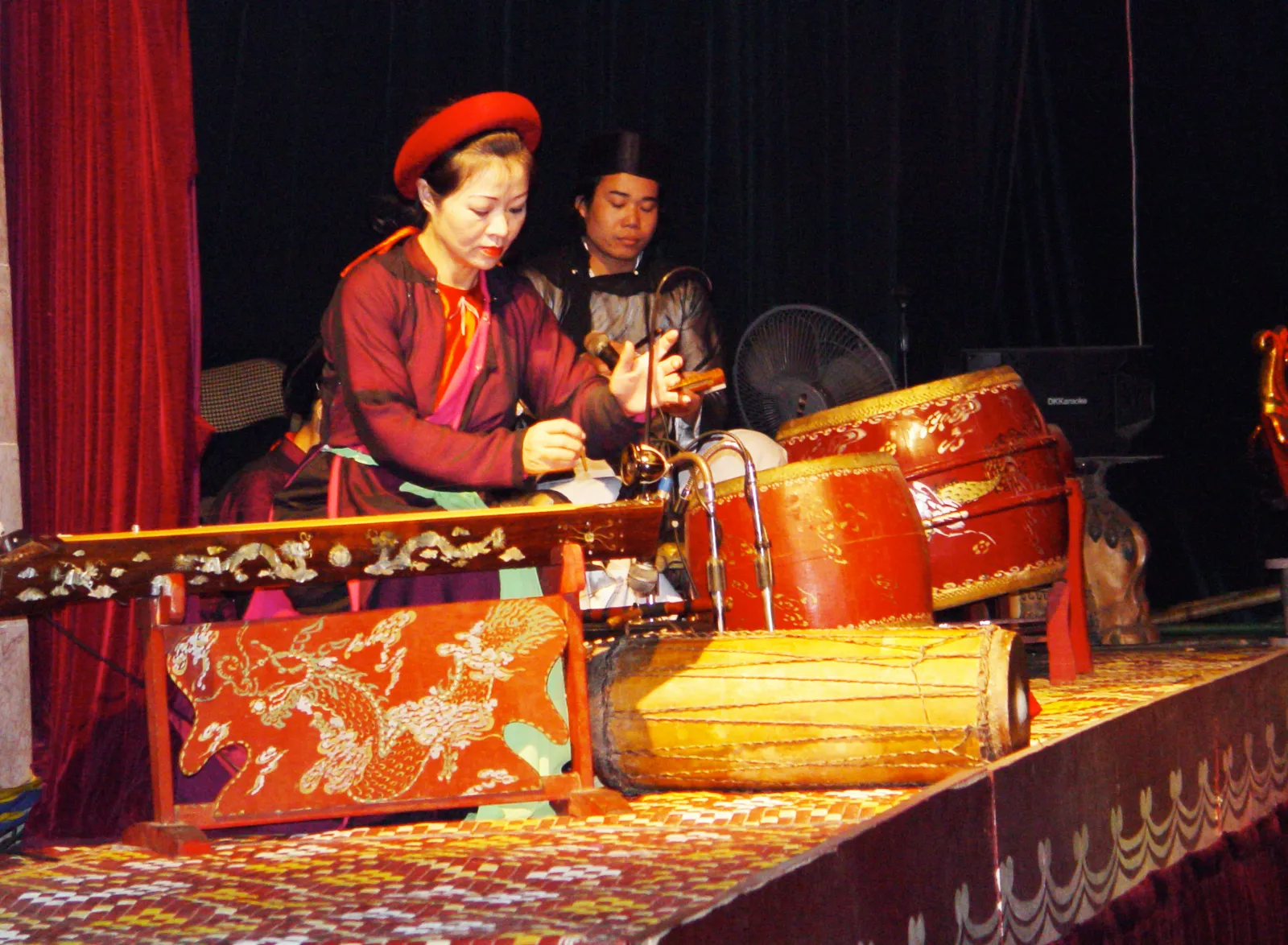
In a classic programme, Wikipedia says, a traditional Vietnamese orchestra plays drums, gongs, bamboo flutes and the đàn bầu, a monochord zither, while chèo singers tell the story. The theatre names a different line-up for SeaSoul: jaw harps, leaf horns, gongs and drums, among others, and describes the music as indigenous to Vietnam and Southeast Asia. Klook's listing says the orchestra plays live for the whole hour. If the instruments interest you, this is more than background sound.
Is it like the traditional form?
In spirit yes, in format partly. It keeps the water, the bright painted puppets, the village themes and the live music. The theatre's description mentions a four-space stage, animation and motion capture, and does not mention a single pool or chèo singers, so do not expect them. Someone who wants the older programme as villagers staged it will find this a different show. Someone who wants to see what a theatre company can do with that heritage will find exactly that, which is how the theatre presents it. Either way, the hour is live from start to finish.
Who this isn't for
Skip it if you want the classic water-puppet programme with chèo singers and village skits, because the theatre does not describe that. It will also disappoint anyone hoping to film the show, since the theatre bars phones, photos and filming during the performance, or if you travel with a child under 3, who the theatre says should not attend. A sister show at the same theatre suits people who would rather watch acrobatics, and a separate guide compares the two.
- You want a village-style programme with chèo singers
- You want to photograph or film the performance
- You are travelling with a child under 3
- You would rather watch acrobatics than puppets
Read next: Puppets or acrobatics: which Đó Theatre show should you pick?
Reading the claims in the listing
Two kinds of statement sit side by side in the listing and on the theatre's site. Some are checkable on the night: the length, the live music, the four-space stage, the child and senior ticket rules. Others are the producer's own claims, such as the world-first bicycle-controlled string puppets. This guide reports the second kind as claims and does not vouch for them. A reasonable way to use both is to book for what you can verify, and to treat the rest as colour about how the theatre sees its work.
Seat zones and booking
Klook sells three seat zones, Zodiac, Tiger and Dragon, plus child and senior tickets, and confirms bookings instantly for the date you choose. Its listing offers free cancellation with 24 hours' notice, though terms can differ by date and ticket, so read the booking page before you pay. The theatre asks guests to arrive 20 minutes early for check-in. Open the seating plan on Klook and choose the zone there, because the plan shows the sightline better than any description. It suits families with children from age 3, travellers who want an evening indoors between beach days and anyone curious about Vietnamese puppetry,. At about an hour, it asks less of an evening than a dinner show would.
A fair verdict
Three questions settle it. Do you want a modern reinvention of water puppetry rather than the village original? Does an hour of live puppetry, dance and music in a seated theatre suit your evening? Is the ride out to Bãi Tiên beach worth it to you? Three yeses mean the show offers what the theatre describes. A no to the first points you to a traditional programme instead, and Klook's 4.5 from 351 reviews is one more input.
Frequently asked questions
What is the Nha Trang puppet show called?
It is Life Puppets, shown at Đó Theatre on Bãi Tiên beach. The Klook listing and the theatre's own site both describe an hour-long production built on Vietnamese water puppetry.
Is it a traditional water puppet show?
Not in the classic sense. It starts from water puppetry but adds string, shadow and animated puppets, contemporary dance and a live orchestra of indigenous instruments on a four-space stage.
How long does the show last?
About 60 minutes, per Klook and the theatre. The theatre asks guests to arrive 20 minutes before the show for check-in.
Can children go?
Yes from age 3. Klook sells a child ticket for ages 3 and over and under 120 cm, and the theatre says the show is not suitable for under 3s.
Is the bicycle puppet claim true?
The theatre and Klook both call its bicycle-controlled string puppets a world first. That is the producer's claim, which this guide cannot verify, so treat it as a description.
Sources