The art form
How Vietnamese water puppetry works
How the puppets, the pool stage, the hidden puppeteers and the orchestra of a water-puppet show work, and where the Nha Trang show departs from the classic form.
See tickets on Klook ↗Quick answer
In classic Vietnamese water puppetry, lacquered wooden puppets seem to move across a pool because puppeteers hidden behind a screen work them with bamboo rods and strings under the surface. A traditional orchestra and singers accompany stories of village life. The Nha Trang show keeps the water and the village themes but adds string, shadow and animated puppets.
A pool as a stage
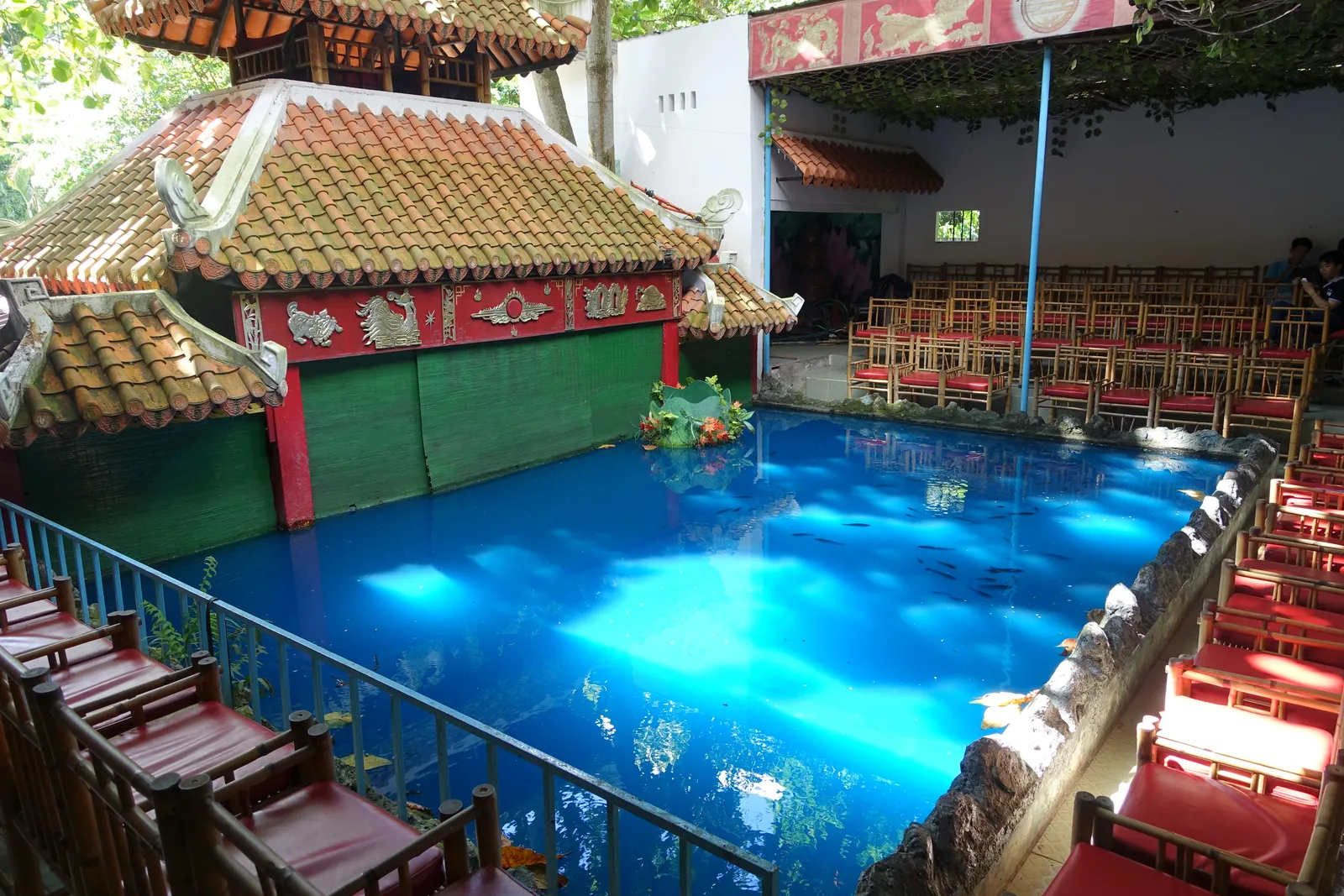
Wikipedia describes modern water puppetry as performed in a pool about four metres square, where the water surface is the stage. Shows happen in village ponds with a staging area, in portable tanks for travelling troupes, or in specialised buildings with a pool built in. The water hides the strings and the puppeteers' movements, improves the acoustics and gives a shimmering light effect. It also links the art to the rice harvest, since the first performances took place in flooded paddies.
Puppets and puppeteers
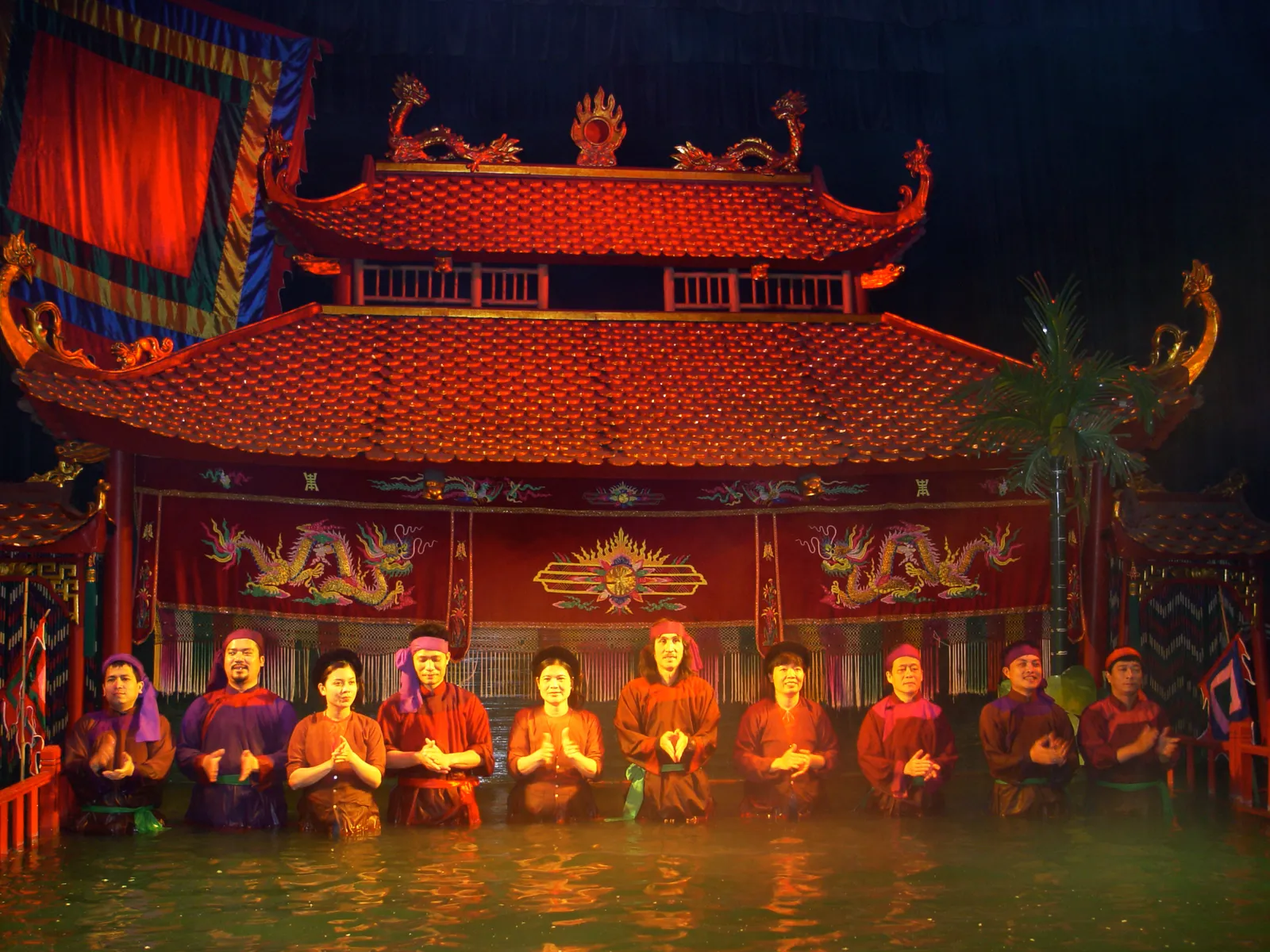
The puppets are carved from wood and then lacquered, and Wikipedia says they can weigh up to 15 kilograms. A large bamboo rod supports each one under the water. Up to eight puppeteers stand behind a split-bamboo screen decorated to look like a temple facade, and they stand in waist-deep water for the whole show, which is why the final bow, with the puppeteers emerging from behind the screen, is part of the performance in many programmes.
The music and the story
A traditional Vietnamese orchestra plays drums, wooden bells, cymbals, horns, gongs, bamboo flutes and the đàn bầu, a monochord zither, Wikipedia says. Singers of chèo, a form of opera from northern Vietnam, sing the story that the puppets act out, and the musicians sometimes call out to a puppet in danger or in need of encouragement. The drums and cymbals can announce a fire-breathing dragon. The music is therefore part of the plot, not only a background.
What the skits are about
The themes are rural and rooted in folklore. Skits tell of day-to-day life in the countryside, folk tales that grandparents tell, and stories of the harvest, fishing and festivals, and many have a humorous twist. Legends and national history also appear in short skits. That is the ground the Nha Trang show draws on when Klook's listing names catching frogs and planting rice among its scenes of daily life.
Tễu, the jester
Chú Tễu is the most recurrent character in water puppetry. Tễu means laugh in ancient Vietnamese, Wikipedia says, and he is a smiling boy in a loincloth who makes witty comments on political and social topics. The theatre in Nha Trang says its story follows the dream of Tễu about ancient life, so the jester that audiences know from the classic form appears in the title of the production's central idea, even in a very different format.
Where the Nha Trang show departs from it
The theatre says it reworked the traditional water pavilion stage into four interwoven spaces and added string puppets paired with tangram pieces, shadow puppets, animation and contemporary dance, with an indigenous-instrument orchestra called SeaSoul. Classic programmes, as described above, rely on a single pool, a screen and chèo singers. A fair summary is that the show borrows the heritage and changes the machinery, which is why a separate guide asks whether it is like the traditional form.
Read next: What is the Nha Trang puppet show, and is it like traditional water puppetry?
Who this isn't for
If you want the older form in its home region, a programme in the Red River Delta is the closer match, and the Nha Trang show does not claim to be one. If you dislike staged cultural shows of any kind, neither format will change your mind. Anyone planning to photograph a performance should note that the theatre in Nha Trang bars photos and filming during its show.
Frequently asked questions
Where did water puppetry begin?
In rural communities of the Red River Delta, in northern Vietnam. Wikipedia places its roots as early as the 11th century.
How do the puppets move on the water?
Puppeteers hidden behind a screen control them with long bamboo rods and strings under the surface, so the puppets seem to glide.
What music accompanies a classic show?
A traditional Vietnamese orchestra with drums, gongs, bamboo flutes and the đàn bầu, plus chèo singers who tell the story.
Who is Tễu?
Tễu is water puppetry's best-known character, a smiling jester boy who comments on social and political matters.
Sources